

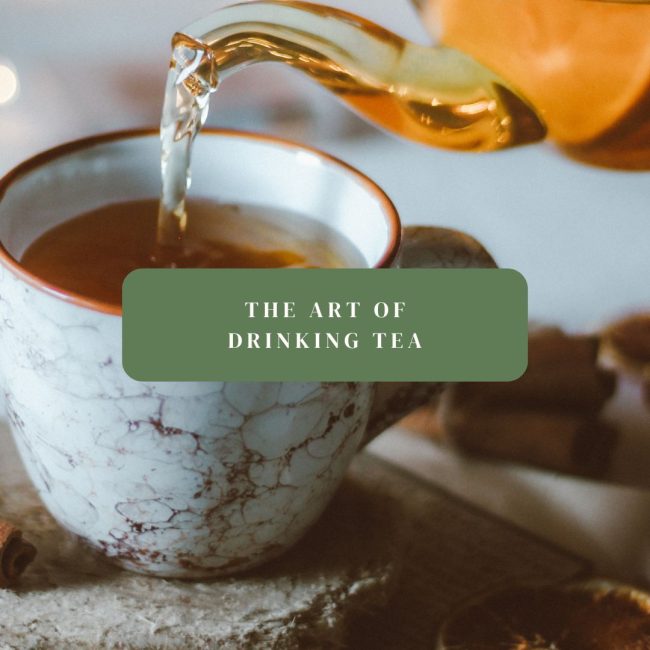
“Drink your tea slowly and reverently, as if it is the axis on which the world earth revolves — slowly, evenly, without rushing toward the future.”
— Thich Nhat Hanh
In our home, coffee belongs to the morning. It is the fuel for the get-up-and-go, the comforting companion to a busy schedule. The delicious aroma signifies the last moments before the day gallops off. But tea? Tea is entirely different. Making a tray of tea is an intentional ritual—a deliberate decision to step off the fast-moving track of the day, sit together, and simply talk.
Setting a tea tray is a beautiful metaphor for life itself. It reminds us that peace and beauty are almost always found in the simplest things. The process demands that you do not rush forward. As the leaves steep, they offer a gentle, forced pause. In that quiet waiting period, we are invited to arrive completely in the present moment, anchoring ourselves to the space we are in and the people we are with.
Years ago, while travelling in Thailand, before having my own children, I read a book titled “Drinking Tea, Living Life”(Ven Visuddhacara). It spoke to me deeply, and I recall sending my mom a photo of the book and some of the writings. An act of gratitude for the ritual she had created, one I wasn’t consciously aware of until that reflective moment. It has stayed with me ever since because it truly is an art, and more than that, a profound gift.
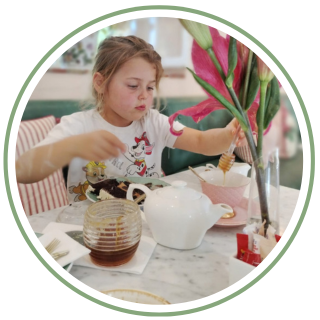
In my own life, this ritual has worn many hats. It represents a lifetime of conversations with my own mother, a practice started in my childhood that led to more shared stories than I could ever count. A hot cup of tea has been extended as an olive branch during a dispute, and it has been offered as a quiet act of loving service to close out a long day. It has arrived quietly, placed down as a flag of peace and held by trembling hands sharing the most difficult times. The simple question, “Would you like a cup of tea?” creates a safe, warm environment. It is an invitation to unpack whatever we might be carrying between delicious, comforting sips.
This beautiful tradition continues to travel from mother to daughter. Many afternoons, you can find me sitting with my own daughters around a freshly prepared tray. As the comforting aroma fills the room, the magic happens all over again. Problems are shared, stories are told, and laughter is shared. (Some sugar might also be the attraction for little humans but with each tray our stories are woven together.)
As a mom, teacher and parent coach, I look at this afternoon tray and see far more than just a warm beverage. I see a profound, foundational framework for healthy family dynamics. If you are looking for a ritual to strengthen your bond with your children, I invite you to try establishing your own family tea ritual.
Here are three reasons why this simple act is one of the greatest coaching tools you can introduce to your home:
- It serves as a powerful nervous system regulation tool. Before a meaningful conversation can happen, our bodies need to feel safe. The sensory experience of tea—the warmth of the mug in small hands, the slow rhythm of the steam rising, and the rhythmic sips—acts as a natural somatic grounder. It triggers the parasympathetic nervous system, shifting both you and your child out of the daily “fight-or-flight” rush and into a biological state of calm.
- It creates a dedicated space for genuine connection. In a world dominated by screens and schedules, deep connection requires an anchor. The physical act of setting a tray sends a clear signal to your child’s brain: “I am stepping away from everything else to be right here with you.” It transitions your interaction from passive co-existence to active, intentional togetherness.
- It ensures your child feels deeply seen and heard. When we slow down to the pace of brewing tea, we eliminate the pressure of a hurried interrogation. The natural pauses built into the ritual allow children the emotional runway they need to open up. Sitting over a tea tray gives them a secure platform to voice their vulnerabilities, tell their stories, and know that their thoughts carry weight in your eyes.
The art of drinking tea isn’t about perfection or fancy porcelain. (Although fancy cups can sometimes be fun) It is a beautifully disguised masterclass in mindful parenting. By slowing down to pause as the tea steeps, you are building a resilient, lifelong bridge of trust and safety with your children and sometimes giving yourself the pause you need to continue with the demands of parenting life.
I’ve always wondered though, why I have never actually finished a cup of tea. There is always one last mouthful or two left behind in my cup—something I’ve been teased, moaned about and possibly analysed over. But I believe I never want to be so satiated that I need not return for another cup. That little bit left at the bottom is my subconscious promise to return to the table, to the warmth, and to the conversation. It is a reminder that the connection is never truly finished; it’s just waiting for the next sitting.